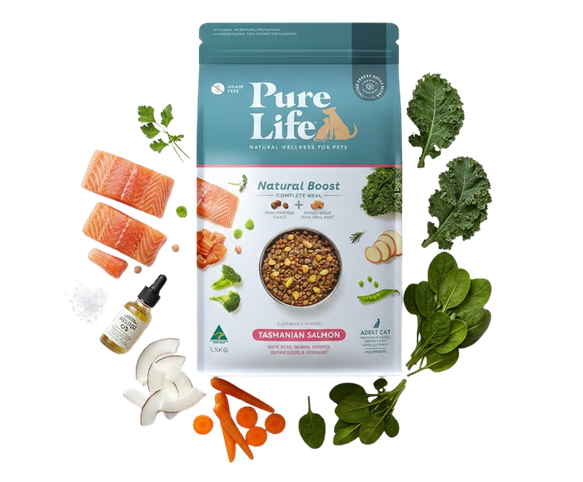
Understanding Food Sensitivities in Cats: Signs to Watch For and Why Pure Life Makes a Difference
Food sensitivities in cats are more common than many pet owners realize. While true food allergies involve an immune response to specific proteins, food sensitivities, sometimes referred to as intolerances, often stem from an inability to properly digest or process certain ingredients. Both can affect a cat’s health and comfort, and recognizing the early signs is essential for long-term wellbeing.
What Causes Food Sensitivities in Cats?
Food sensitivities typically arise when a cat’s digestive system struggles to break down a particular ingredient. Cats are obligate carnivores, meaning their digestive tracts are optimized for animal-based proteins rather than fillers such as corn, soy, or wheat. When diets contain complex carbohydrates, artificial additives, or low-quality protein sources, sensitive cats may experience inflammation in the gastrointestinal tract.
Common dietary triggers
- Beef, chicken, or dairy proteins (some cats develop sensitivity after repeated exposure)
- Grains (especially those used as fillers)
- Artificial colors, flavors, or preservatives
- Low-quality rendered proteins or by-products
- Over time, these ingredients can disrupt digestive enzymes or irritate the gut lining, leading to chronic symptoms that may worsen without dietary changes.
Signs Your Cat May Have a Food Sensitivity
Cats are experts at hiding discomfort, so early detection relies on closely monitoring subtle symptoms. Scientific studies consistently link the following signs to adverse food reactions:
Cats are experts at hiding discomfort, so early detection relies on closely monitoring subtle symptoms. Scientific studies consistently link the following signs to adverse food reactions:
Chronic Digestive Upset
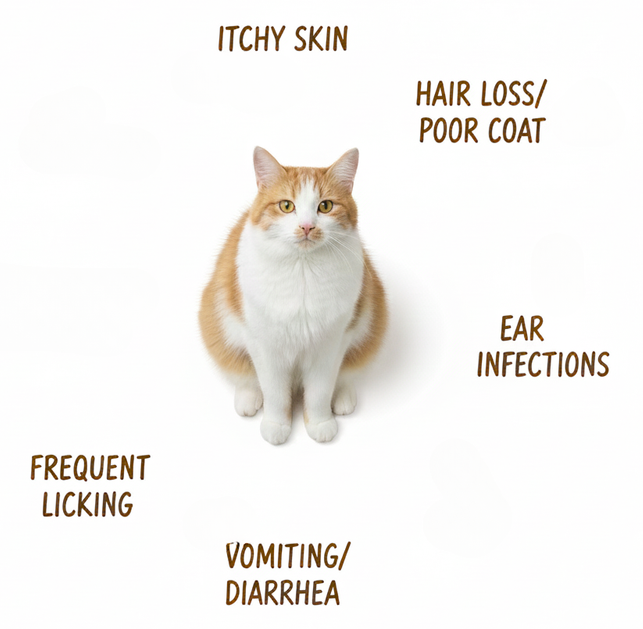
- Frequent vomiting
- Soft stools or diarrhea
- Excessive gas
- Constipation alternating with diarrhea
- These symptoms suggest the digestive tract is inflamed or unable to process key nutrients.
Skin and Coat Issues
- Itching or scratching without fleas
- Over-grooming, especially belly and legs
- Dry, flaky skin
- Recurrent ear infections
- When the gut is irritated, the immune system may overreact, causing inflammation that shows up on the skin, one of the most common indicators of dietary sensitivity.
Behavioral Changes
- Decreased appetite
- Irritability
- Low energy
- Pain or nausea can subtly change a cat’s mood or activity levels.
If your cat shows two or more of these signs consistently, a diet evaluation is a smart next step.
Why Pure Life Is a Strong Option for Sensitive Cats
Pure Life offers a clean, biologically appropriate approach to feline nutrition, something especially important for cats with sensitivities.
Key advantages:
- High-quality animal proteins that align with a cat’s natural dietary needs and reduce the chance of inflammatory reactions.
- Limited, transparent ingredient lists that make it easier to pinpoint and avoid sensitivity triggers.
- Grain-free or low-filler formulas that support easier digestion and reduce gastrointestinal stress.
- No artificial additives or unnecessary preservatives, common culprits behind food-related irritation.
- Scientifically balanced nutrients to promote healthy skin, a shiny coat, and overall immune support.
- For cats struggling with chronic digestive or skin symptoms, a cleaner, more natural diet like Pure Life can help break the cycle of inflammation and support long-term digestive resilience.
Food sensitivities in cats can be subtle but impactful. By recognizing early signs and choosing a high-quality diet such as Pure Life, rich in natural proteins and free of common irritants, you can support your cat’s digestive health, skin condition, comfort, and longevity.